Supporting Leadership in Schools
Developing the human capacities that strengthen
leadership, teams, and schools.
Supporting educational leaders and leadership teams to navigate complexity, strengthen professional practice, and build the human capacities that enable sustainable change.

Why This Work?
International educators are navigating increasing levels of complexity. Leaders are being asked to sustain high-quality learning while responding to continuous change, competing priorities, evolving expectations, and the many uncertainties that characterize contemporary school life.
Many of these are adaptive challenges that cannot be addressed through technical expertise alone. They certainly require knowledge, skills, structures, and collaborative practices. But they also require leaders to examine how they think, how they make meaning, how they respond under pressure, how they relate to others, and how they participate within the wider system.
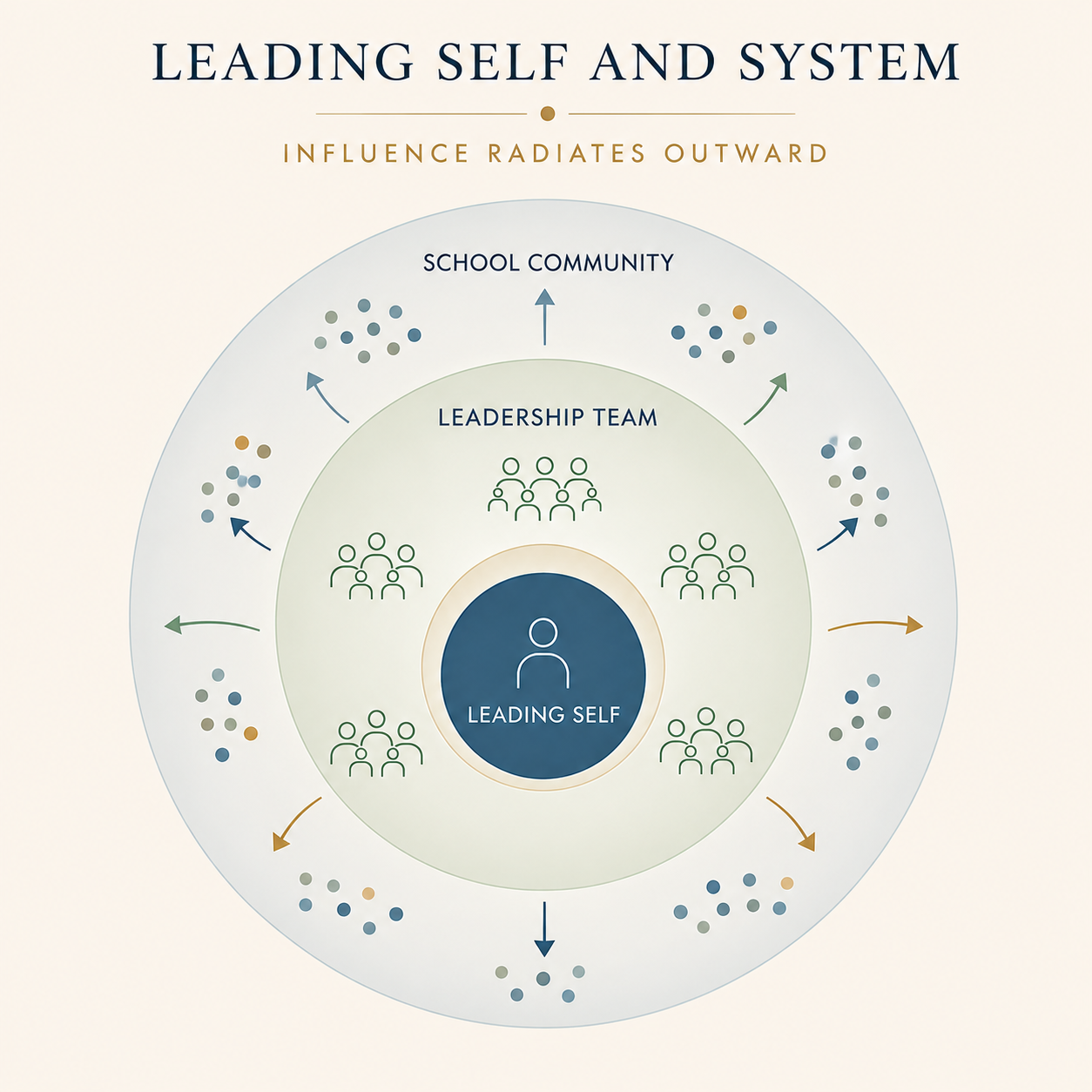
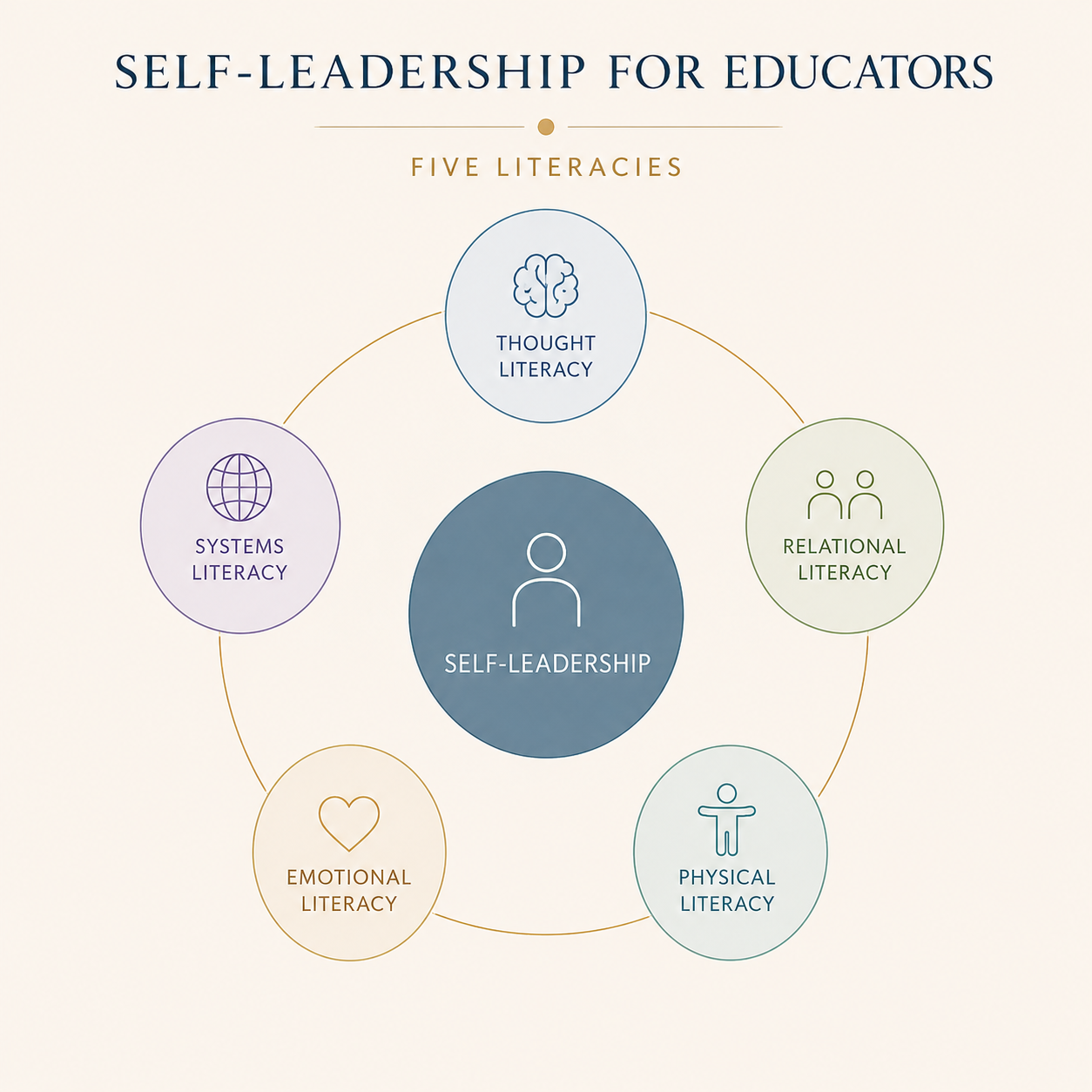
The first person we lead is ourselves. Before we influence a team, facilitate change, or shape a school culture, we bring our own ways of thinking, relating, responding, and making meaning into every interaction. Self-Leadership for Educators invites leaders to notice and nurture these internal capacities so they can lead with greater awareness, intention, and impact.
When leaders develop a shared literacy around the human dimensions of leadership, they gain a common language for understanding themselves and one another. Differences become easier to recognize, discuss, and navigate. This strengthens collaborative alignment and expands the capacity of leaders and teams to influence practice and impact the wider school community. Including students!
A Leadership Challenge
International schools are complex, dynamic communities that ask a great deal of their leaders. Navigating change, supporting people, strengthening learning, and sustaining a shared vision requires knowledge, experience, and skill. Yet experience repeatedly shows that knowing what to do is not always enough.
Every leader brings a unique set of maps and guardrails to their work: different ways of thinking, making meaning, responding to challenge, and relating to others. These shape how leaders interpret situations, enact shared agreements, navigate differences, and participate within teams.
Such differences are both inevitable and invaluable. But they can also generate familiar tensions. Change creates uncertainty. Shared decisions require negotiation. Differences in perspective create disagreement. Competing priorities place pressure on relationships. Even highly effective teams experience conflict as they work to balance individual needs with collective commitments.
This work offers a way of understanding these human dimensions more deeply and navigating them more intentionally. By making them more visible, leaders can develop greater awareness of themselves and others, strengthening both individual practice, collaborative alignment and system impact.

Explore the Work
Whether you are developing as an individual leader or working within a leadership team, there are multiple ways to engage.
The courses provide structured opportunities for learning and reflection. Coaching provides a sustained, context-specific partnership grounded in professional practice.
Leading Self
Self-Leadership for Educators
An online course exploring the five literacies and the human dimensions of leadership.
Leadership Coaching
A year-long leadership partnership that supports reflection, growth, and intentional professional practice.
Leading Self and System
Leading Self and System
A team-based course exploring the human dimensions of leadership in the context of schools, leadership teams, and collaborative practice.
Leadership Team Coaching
A developmental partnership that supports leadership teams through observation, feedback, reflection, and collaborative alignment.